
Latest insights
7 Senior Home Safety Tips Without Renovation
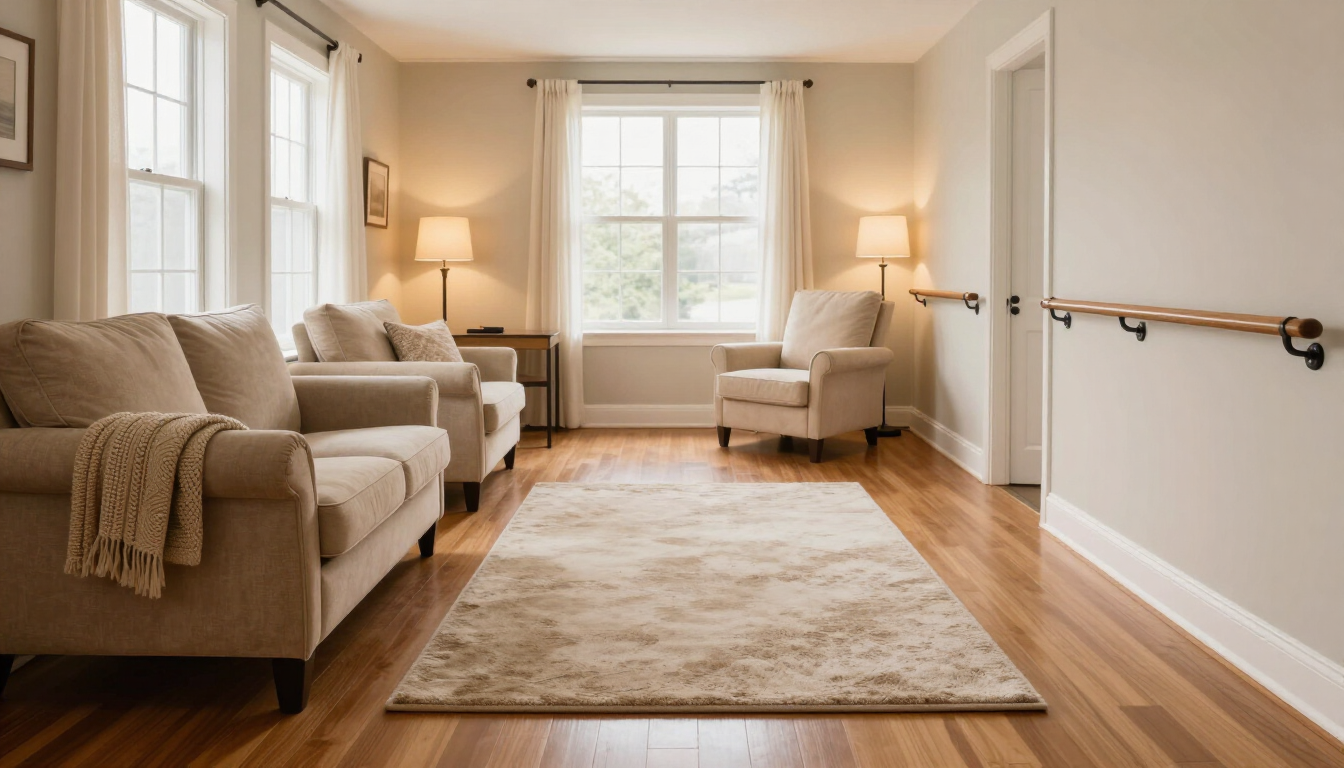
September 9, 2026
By team Lenn & Co.
Senior home safety does not require a major renovation. Small changes—removing trip hazards, improving lighting, adding bathroom support, organizing essentials, and creating safer routines—can reduce fall risks and help an older adult remain confident and independent at home.
What are the biggest senior home safety risks?
The most common risks are ordinary household features that become harder to manage with changes in balance, vision, strength, or memory. Look for:
- Loose rugs, cords, clutter, and narrow walkways
- Dim lighting, glare, or missing night-lights
- Slippery bathroom floors and hard-to-reach supplies
- Stairs without sturdy handrails or clear edges
- Frequently used items stored too high or too low
Walk through the home at the older adult’s normal pace. Notice where they pause, hold onto furniture, shuffle, reach, or avoid an area. These observations are often more useful than a quick visual inspection.
1. Clear walking paths first
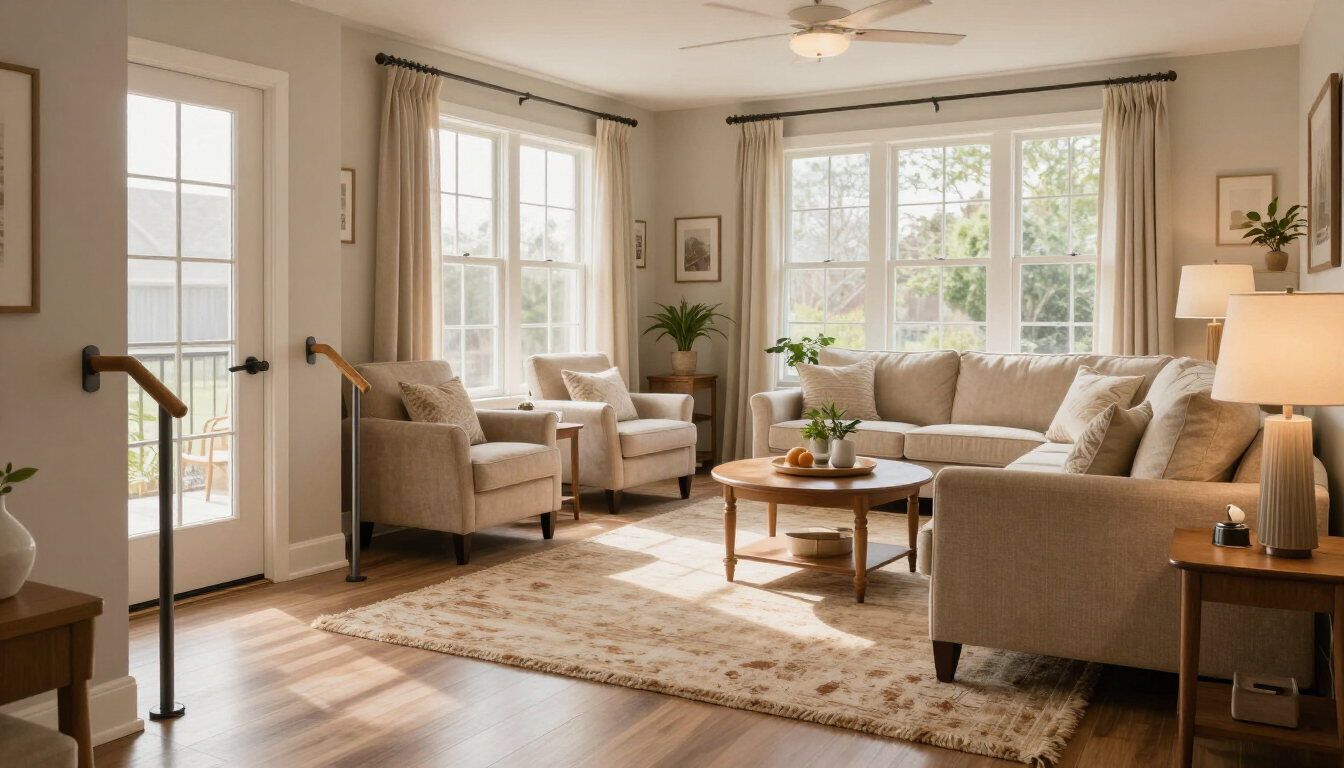
A clear path is one of the simplest ways to improve home safety for seniors. Start with the routes used every day: the bedroom to the bathroom, the kitchen to the living room, and the front door to the driveway.
Remove baskets, plants, shoes, small tables, and decorative items that narrow the walkway. Secure or remove throw rugs, especially near beds, bathrooms, and entrances. Tape or cover electrical cords so they do not cross walking areas.
Do not move furniture without asking. A familiar arrangement can help someone with memory or vision changes navigate confidently. If furniture must be moved, make one change at a time and walk the route together.
How can lighting prevent falls?
Good lighting helps an older adult see changes in floor level, obstacles, spills, and pets. It also makes it easier to find a safe handhold or identify medications and household controls.
Try these low-cost improvements:
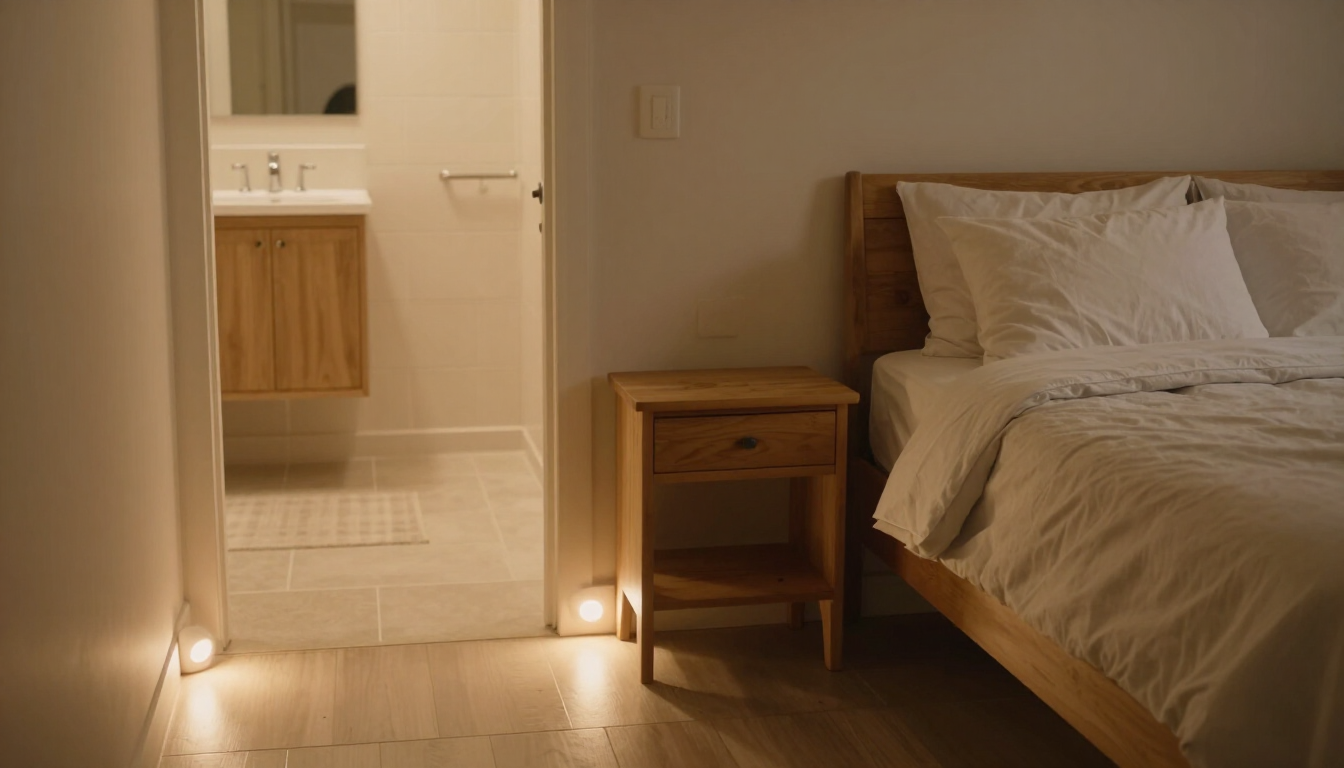
- Add plug-in night-lights between the bedroom and bathroom.
- Use brighter, evenly distributed bulbs where appropriate.
- Replace burned-out bulbs promptly and keep spare bulbs accessible.
- Add motion-sensor lights in hallways, closets, stairways, and entrances.
- Reduce glare by adjusting shades or using lamp shades that diffuse light.
Keep light switches easy to reach at both ends of hallways and stairways when possible. A flashlight beside the bed can help during a power outage, but it should be large enough to find and simple to operate.
Make the bathroom safer
Bathrooms combine water, smooth surfaces, tight spaces, and frequent transitions from sitting to standing. They deserve special attention in any senior home safety review.
Use nonslip mats that lie flat and do not slide. A shower chair or handheld showerhead may reduce fatigue and the need to stand for long periods. Place soap, shampoo, towels, and toiletries within easy reach so the person does not bend or stretch while wet.
Grab bars should be securely installed into appropriate structural support; towel bars are not designed to hold body weight. A raised toilet seat, toilet safety frame, or higher-contrast seat may also make transfers easier.
Avoid leaving water on the floor, and keep a dry towel available outside the shower. If balance is uncertain, ask an occupational therapist or qualified professional to assess the bathroom before purchasing equipment.
2. Make stairs and entrances easier to use
Stairs and entryways should be bright, uncluttered, and easy to grip. Check that handrails are sturdy and extend far enough to support the first and last steps. If there are stairs on both sides of a frequently used route, a second handrail can provide additional stability.
Mark changes in floor height with contrast rather than loose tape that can peel up. Keep packages, shoes, and seasonal decorations away from steps. At the entrance, provide a stable chair or bench for putting on shoes, and choose footwear with nonslip soles and a secure fit.
For a person who struggles with stairs, consider whether daily essentials can be moved to one level. This is often a practical adjustment that avoids construction.
What should be moved within easy reach?
Reorganizing storage can prevent risky bending, climbing, and reaching. Place frequently used items between shoulder and hip height, including dishes, cookware, clothing, toiletries, and cleaning supplies.
Avoid step stools whenever possible. If something is used only occasionally, ask a family member or helper to store it safely and retrieve it when needed. Keep heavier objects on lower shelves and lighter objects higher up.
In the kitchen, move commonly used appliances to a stable counter with enough surrounding space. Keep knives and hot cookware positioned to reduce reaching across burners or crowded surfaces. A small rolling cart can help transport meals, laundry, or supplies without carrying too much at once—but it should have stable wheels and a clear path.
Improve bedroom and nighttime routines
Many falls happen when someone gets up quickly in the dark. Place a lamp or touch-activated light within reach of the bed. Keep glasses, a phone, water, and needed medications on a stable bedside surface rather than on the floor.
The bed should be a comfortable height for sitting and standing. Remove loose mats near the bed, and make sure blankets do not trail into the walking path. Encourage wearing supportive, well-fitting footwear instead of walking in socks.
If nighttime bathroom trips are frequent, a clear route and motion-sensor lighting can help. Discuss sudden changes in nighttime movement, dizziness, or repeated falls with a healthcare professional.
3. Build safer daily habits
A safer home works best when routines support it. Encourage the older adult to slow down during transitions, use handrails, and pause before walking after standing. Keep a phone or emergency alert device accessible in the rooms used most often.
Create a simple plan for spills, snow, ice, burned-out bulbs, and maintenance concerns. Decide who will check the home after severe weather and who can respond if the older adult calls for help.
Medication organization can also support safety. Keep medicines labeled and stored consistently, and ask a pharmacist or clinician about dizziness, drowsiness, or interactions that may affect balance. Do not change prescriptions without medical advice.
Which safety upgrades are worth considering?
Some improvements cost little; others deserve professional guidance. Prioritize changes based on actual needs rather than buying every product marketed for aging in place.
Low-cost options may include:
- Motion-sensor night-lights
- Nonslip bathroom mats
- Cord covers and cable management
- Brighter bulbs and easy-reach lamps
- Stable chairs with arms for resting during tasks
More involved options can include professionally installed grab bars, improved stair lighting, threshold adjustments, lever-style handles, and accessible shower equipment. A home safety assessment and support plan can help your family create a prioritized list instead of tackling everything at once.
A practical room-by-room checklist
Use this checklist during a calm daytime visit. Ask the older adult what feels difficult or unsafe; their experience should guide the plan.
- Entry: Are steps, thresholds, and walkways clear and well lit?
- Living areas: Can the person walk without weaving around furniture or cords?
- Kitchen: Are daily items reachable without climbing or stretching?
- Bathroom: Are floors dry, support points secure, and supplies accessible?
- Bedroom: Is there a clear, illuminated route to the bathroom?
Take photos only with permission, and revisit the home after any illness, injury, medication change, or mobility change. Safety needs can change quickly.
When should a family request professional help?
Consider professional guidance when there have been falls or near-falls, repeated dizziness, difficulty with stairs, confusion about household equipment, or a major change in mobility. Help is also valuable when family members live elsewhere and cannot regularly inspect the home.
Baker Senior Concierge serves families in Williamson County, Tennessee, with practical support for aging in place and life transitions. You can book a consultation to discuss priorities, or review the service menu for transportation, home support, fitness and nutrition, technology help, and other options. Quotes are free, complete, and transparent.
Frequently asked questions
Does a senior need a remodeled bathroom to be safe?
Not always. Removing slippery mats, improving lighting, organizing supplies, and adding properly installed support equipment may address immediate risks. A professional assessment can determine whether a larger change is necessary.
What is the first senior home safety improvement to make?
Start by clearing walking paths and improving nighttime lighting. These changes are usually inexpensive, quick to complete, and helpful in nearly every home.
How often should a home safety check be repeated?
Review the home at least annually and after a fall, hospitalization, illness, medication change, or noticeable mobility change. Seasonal checks are useful for entrances, lighting, and outdoor walking surfaces.
Key takeaways
Senior home safety is usually improved through a series of small, targeted changes—not a major renovation. Clear paths, brighter lighting, safer bathrooms, secure stairs, and reachable storage can reduce everyday risks while preserving independence. Walk through the home with the older adult, prioritize the areas they use most, and make changes gradually. If falls, mobility concerns, or complex needs are involved, request an assessment and a clear plan. Your next step is simple: choose the highest-risk room, make one practical improvement, and evaluate what should come next.
Other insights
More from Lenn & Co.